

Matte and glossy finishes are not better or worse — they are different tools for different rooms, and the right choice depends on light, lifestyle and the level of precision your space can sustain.
What matte does well
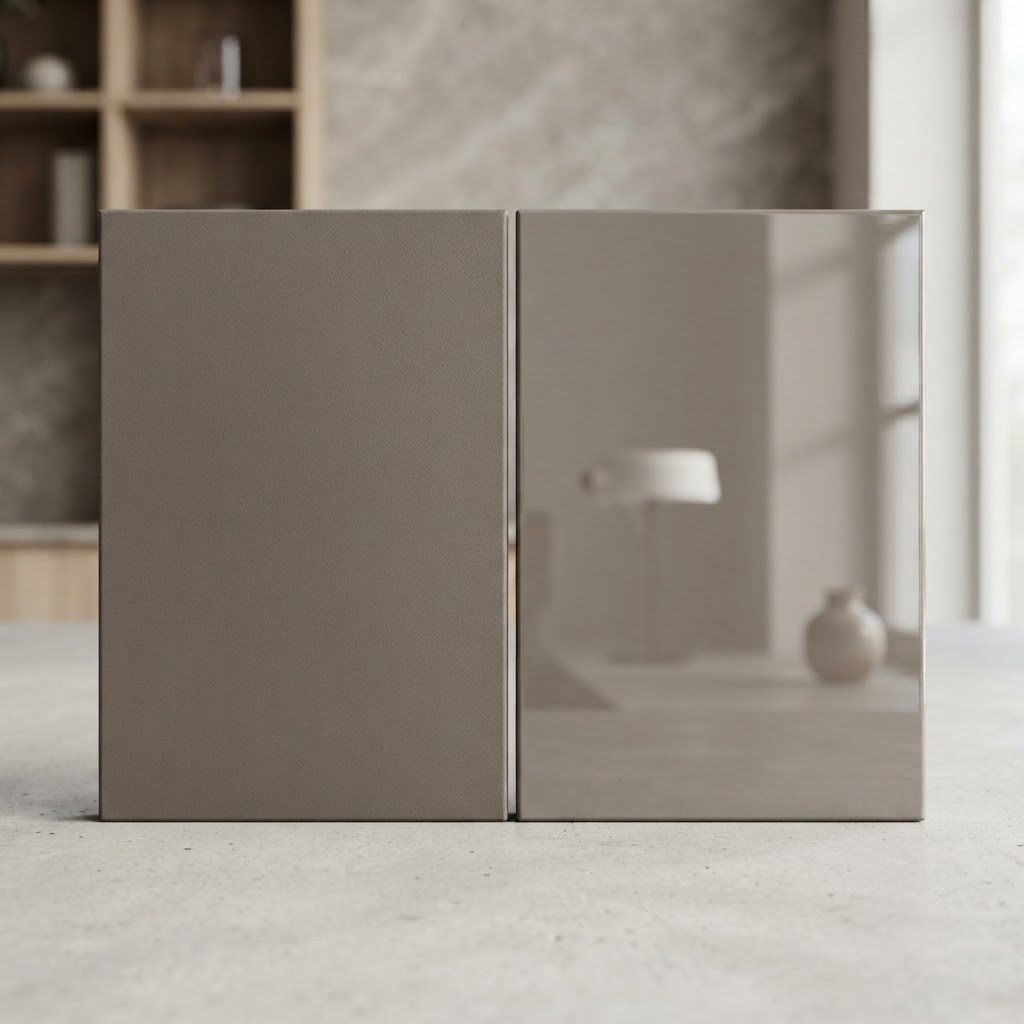
A matte lacquer absorbs light rather than reflecting it, which makes it forgiving of fingerprints, smudges and minor imperfections in the wall behind it. It reads calm, architectural and contemporary, and it lets surrounding materials — stone, timber, plaster — read more clearly. In a busy family kitchen, matte is often the more livable choice.
What gloss does well
A high-gloss finish bounces light deep into a room, which can make a small or north-facing kitchen feel larger and brighter. It also adds a layer of polish and drama that suits formal or modern interiors. The trade-off is maintenance: gloss shows every fingerprint, every dust line and any deviation in the wall, so it demands a precisely prepared substrate and consistent cleaning.
Choose gloss for the light it gives back; choose matte for the light it lets you forget.
Where sheen sits between the two
Most luxury finishes are not truly flat or truly mirror-gloss. A low-sheen satin lacquer, a soft-touch matte or a hand-rubbed wood finish sits between the extremes and often resolves the dilemma entirely — enough depth to feel alive, enough restraint to stay livable.
How to decide
Request large samples, bring them home and live with them for a few days beside your stone, your floor and your hardware. The finish that disappears into the room is usually the right one.
- Review every sample in your actual kitchen lighting, not the showroom's
- Place it next to your countertop and floor — finish never lives alone
- Touch it with the hands that will use the kitchen every day
- Check it in morning, midday and evening light before deciding
A matte finish forgives a wall that is less than perfect; a gloss finish exposes it. If your substrate is uneven, let that weigh into the decision as heavily as aesthetics.