

The right cabinet style is not the one that looks best in a showroom — it is the one that belongs in your home, supports your routines and ages gracefully alongside the architecture.
Let the architecture lead
A flat-panel door reads as modern and architectural; a shaker profile carries transitional warmth; an inset or beaded door belongs in a period home. Begin by reading the lines of the room, the era of the house and the quality of the light, then choose a door that feels native to the space rather than imposed on it.
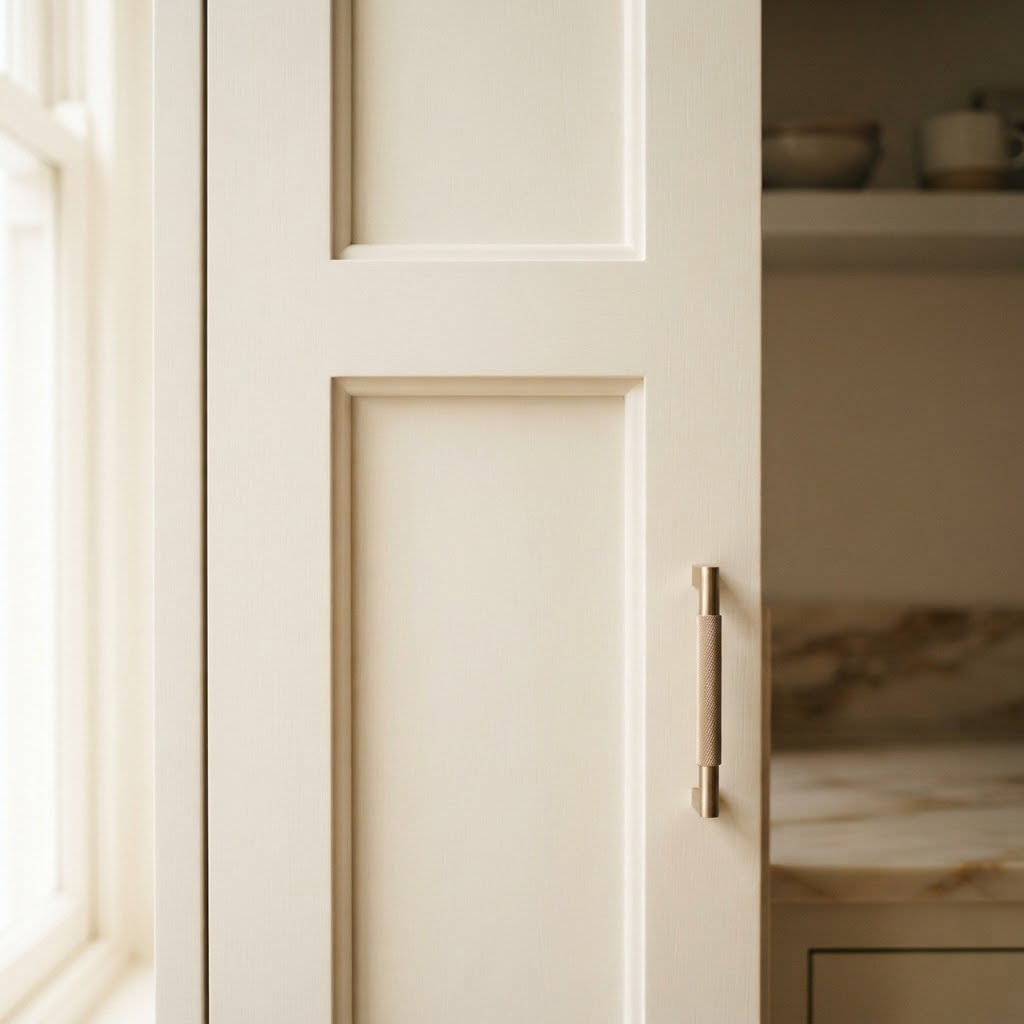
Consider proportion, not just profile
The same door style can look entirely different at different heights and widths. Taller doors elongate a room; wider drawers feel generous and contemporary. Rail and stile widths, the gap around an inset door and the reveal between cabinets all shape the final impression more than the style name on the sample.
The door you choose should disappear into the room — noticed only as a feeling ofrightness, not as a decision.
Choose a finish that will wear well
Matte lacquer hides fingerprints and reads calm; wood veneer adds texture and depth; high-gloss amplifies light but demands precision. Samples should be reviewed in your actual lighting, next to your countertops and floors, before any decision is fixed.
Plan the interior for how you live
Door style is what visitors notice; interior organization is what you live with every day. The details that make cabinetry feel truly custom rather than merely custom-made:
- Drawers in place of lower shelves, so nothing lives at the back of a dark cabinet
- Integrated storage mapped to how you actually cook, clean and gather
- Specified hardware — pull-outs, dividers, waste systems — chosen for your routines
- A layout that leaves counter space where you need it, not where it is easiest to draw
Before you commit to a door style, tape full-size samples to your cabinets and live with them for a week. The right choice reads quieter over time, not louder.